More than 120 industry leaders gathered in Downtown Miami to address America’s $9 trillion infrastructure challenge, the rise of autonomous transportation, and the future of public-private investment.
MIAMI, FL – October 15, 2026 – With U.S. infrastructure investment needs estimated at more than $9 trillion over the next decade, over 600,000 bridges nationwide, and autonomous vehicles already surpassing 270 million miles of fully driverless operation, the future of American infrastructure is entering a critical period of transformation.
Against this backdrop, more than 120 senior executives, government officials, investors, and industry leaders gathered at Miami Tower in Downtown Miami for the fourth edition of the Infrastructure Summit 2026, organized by the Spain-U.S. Chamber of Commerce in Florida and presented by Sacyr.The Summit convened representatives from leading companies such as Sacyr, J.P. Morgan, Goldman Sachs, KPMG,Waymo and institutions, including the U.S. DOT Advisory Board, the Build America Bureau, and Departments of Transportation de Tennessee and South Carolina, together with the North Carolina Turnpike Authority, to examine the technologies, investments, and policies shaping the next generation of U.S. transportation and infrastructure.
Autonomous Vehicles and eVTOL: A New Era of Mobility
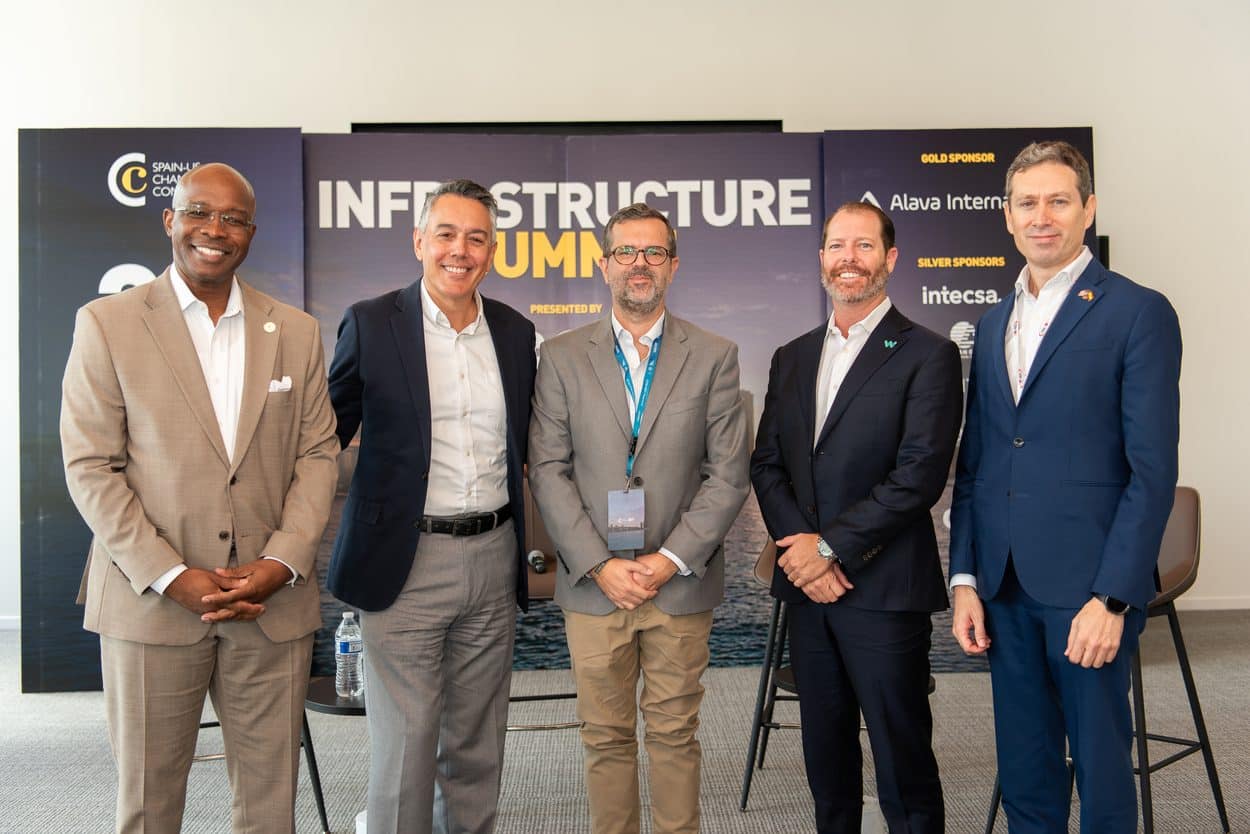
The opening panel, The Future of Autonomous Vehicles and eVTOL, featured Keith Carswell, Director of the Department of Economic Innovation & Development at the City of Miami; Rafael Teixeira, Managing Director at Álava International; Piet van Os, Head of Enterprise Resilience at Waymo; and Rolando “Roly” Tapanes, VP of Business Development at VertiPorts by Atlantic.The discussion explored how autonomous vehicles and electric aircrafts are moving from technological innovation toward commercial reality. With Waymo already completing more than 500,000 paid autonomous rides per week and surpassing 270 million fully autonomous miles, the panel highlighted the rapid advancement of driverless mobility. Meanwhile, electric vertical takeoff and landing aircraft (eVTOLs) are emerging as a potential solution for congested metropolitan areas such as South Florida, where limited space for road expansion is driving interest in alternative transportation systems. Florida’s growing investment in vertiport infrastructure and electrification was highlighted as an important step toward the future introduction of commercial air taxi services. As technology continues to advance faster than infrastructure, real-time monitoring, data analytics, and the modernization of existing networks are becoming increasingly essential. Rather than rebuilding infrastructure from scratch, the priority should be to make existing systems smarter, more efficient, and better equipped to support the mobility needs of the future.
Modernizing America’s Infrastructure and Unlocking Private Investment
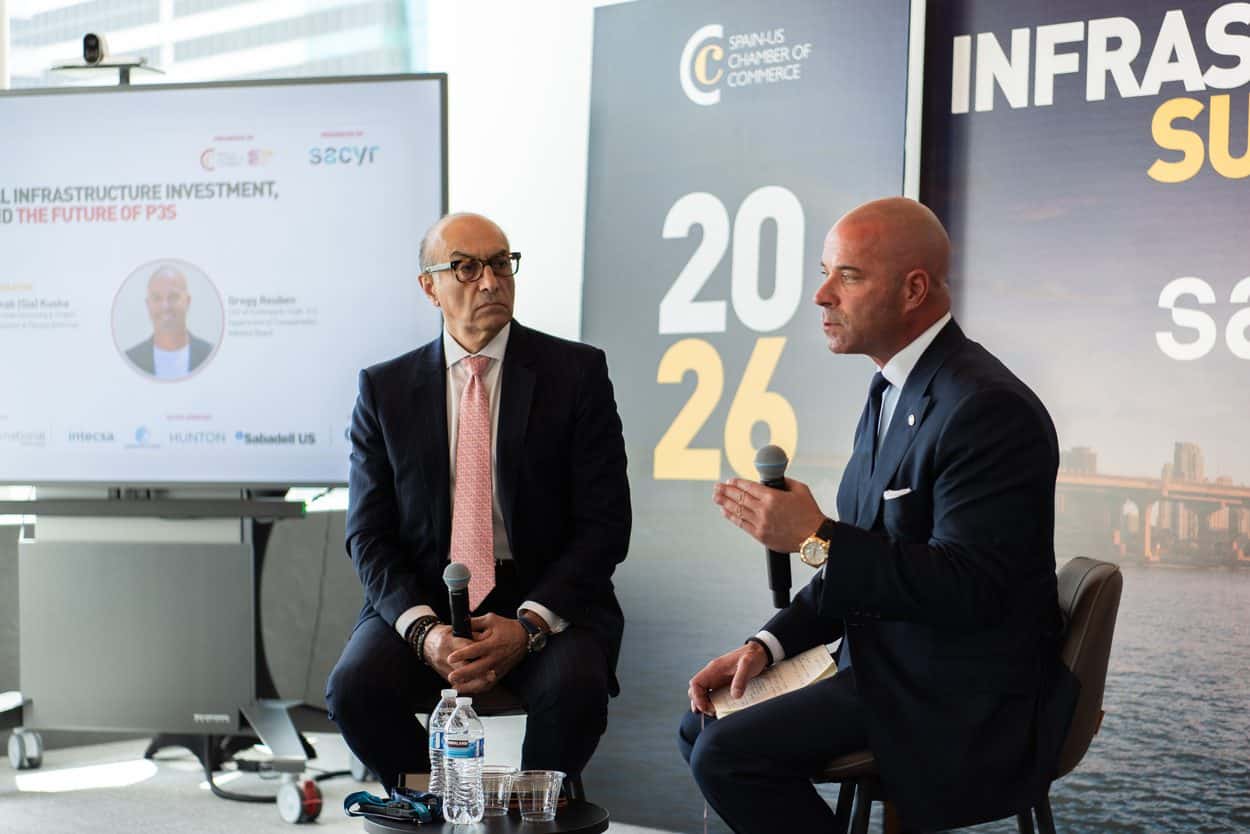
The second session, a fireside chat titled Federal Infrastructure Investment, NIDO and the Future of P3s, featured a conversation between Siamak (Sia) Kusha, Group Head of Partnering & Project Development at Plenary Americas, and Gregg Reuben, CEO of Centerpark and Chair of the U.S. DOT Advisory Board.
The discussion addressed the scale of America’s infrastructure challenges, from an aging network of more than 600,000 bridges to a nationwide shortage of truck parking facilities and the need to modernize major transportation hubs. With infrastructure investment requirements estimated above $9 trillion over the next decade, the panel stressed the importance of shifting from reactive maintenance toward a comprehensive, long-term modernization strategy. Priorities included improving freight transportation efficiency, upgrading bridges, and reimagining how existing urban space is used.
A central conclusion was that the greatest obstacle to infrastructure development is not necessarily the availability of capital, but the complexity and uncertainty of delivering projects. The proposed National Infrastructure Development Office (NIDO) was discussed as a potential mechanism to accelerate public-private partnerships (P3s), standardize procurement processes, reduce regulatory delays, and make projects more attractive to private investors. The panel also emphasized the need for innovative financing structures and infrastructure policies capable of supporting projects beyond individual political cycles, particularly in fast-growing regions such as South Florida.
The Infrastructure Pipeline: What’s Next Across America
The third panel brought together Liam Kelly, Principal, Infrastructure at KPMG; Bryan Ledford, Bureau Chief of Major Projects at the Tennessee Department of Transportation; Justin Powell, Secretary of Transportation at the South Carolina Department of Transportation; Carly Swanson, Director of Innovative Delivery at the North Carolina Turnpike Authority; and Dr. Morteza Farajian, Executive Director of the Build America Bureau.
The discussion highlighted the growing momentum of public-private partnerships (P3s) at the state level, with Tennessee, South Carolina, and North Carolina advancing major transportation initiatives. Tennessee’s P3 program is progressing with new corridor opportunities in Nashville, Chattanooga, and Knoxville, while South Carolina’s recently approved legislation is paving the way for infrastructure investment around Charleston’s rapidly expanding transportation network. In North Carolina, the I-77 South Express Lanes project is moving forward, with renewed emphasis on community engagement and early collaboration with private developers.Beyond individual projects, the panel emphasized that successful infrastructure delivery requires transparency, community involvement, and predictable regulatory and financing frameworks. Early engagement with residents, industry stakeholders, and potential investors was identified as essential to reducing delays, strengthening public trust, and ensuring that projects respond to real transportation needs. The discussion also explored how P3 models could expand beyond traditional highways to integrate energy transmission, telecommunications, and digital infrastructure, creating new revenue opportunities while improving the resilience and efficiency of America’s transportation networks.
Miami’s Infrastructure Future: Preparing for Growth
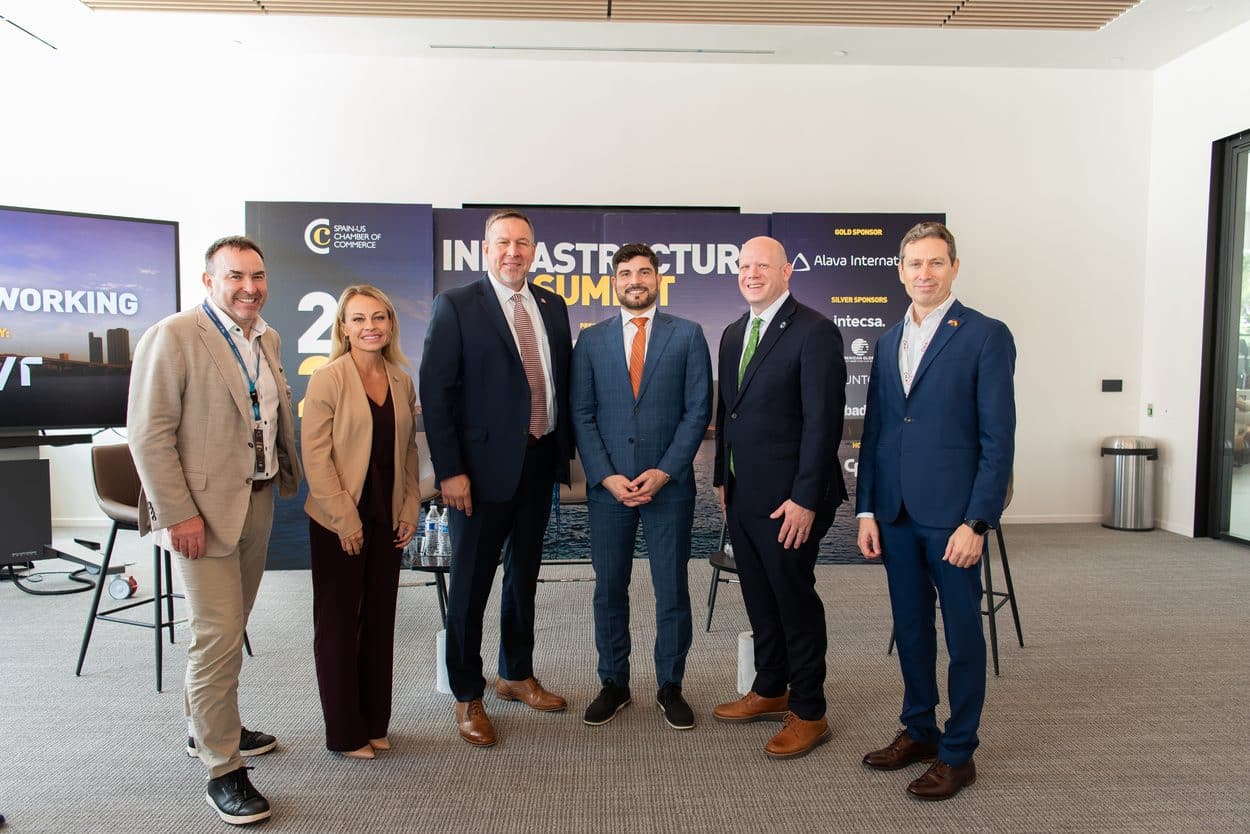
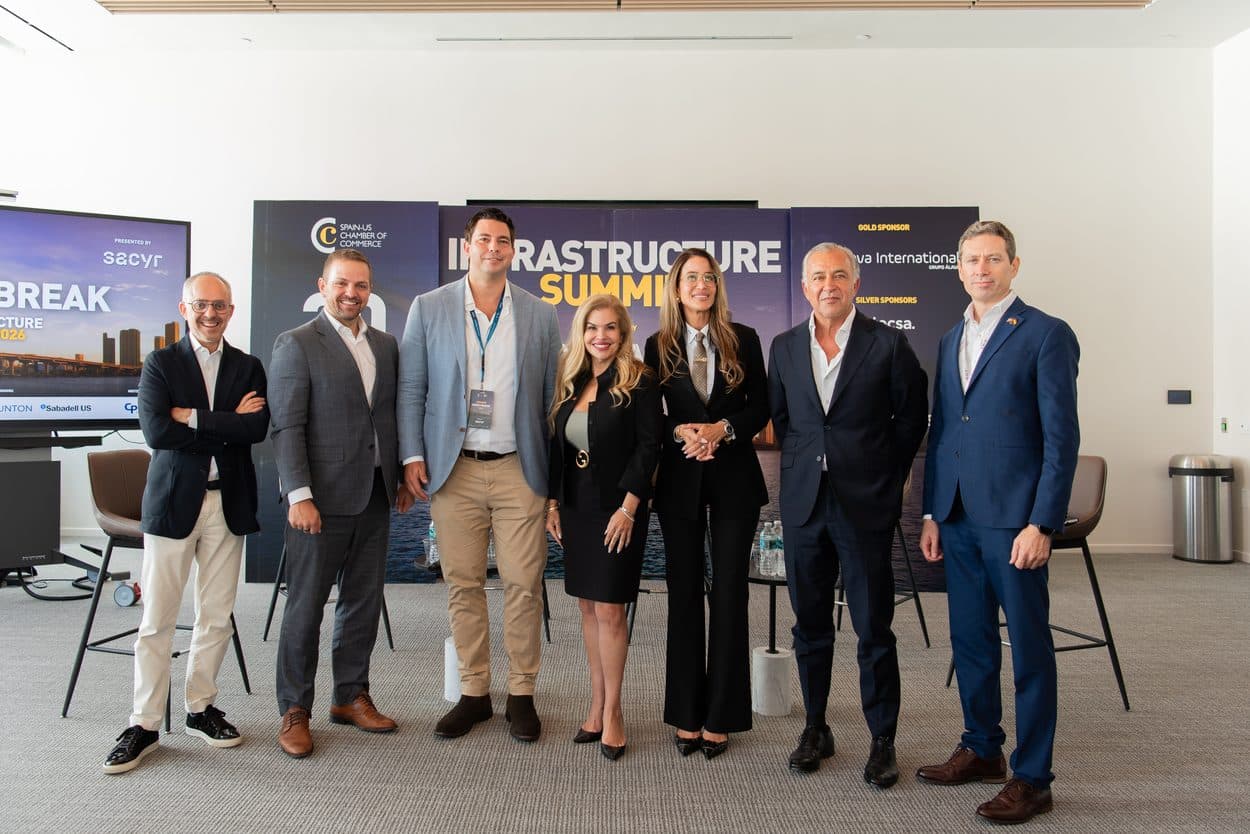
The fourth panel, What Can We Do in Miami?, featured Alice Bravo, President & CEO of Alice Bravo & Associates; Eduardo De Lara, Managing Director North America at Sacyr Concesiones; Danielle Cohen-Higgins, Miami-Dade County Commissioner; Mike Redondo, State Representative at the Florida Legislature; Andre Dua, Co-Chair of the Partnership for Miami; and Andrej Micovic, Partner in the Energy and Infrastructure Group at Hunton Andrews Kurth.
The discussion exposed the growing economic consequences of Miami’s transportation challenges. According to figures presented during the Summit, traffic congestion costs Miami approximately $3.4 billion annually, while drivers now experience an estimated 93 hours of delays per year, compared to 52 hours in 2005. Despite a 79% increase in congestion delays, the region’s transportation network has expanded by only 14%, highlighting a widening gap between population growth and infrastructure investment.
Panelists identified political uncertainty, canceled transportation projects, rising construction costs, and long-term funding commitments as major barriers to progress. Public-private partnerships (P3s), innovative financing structures, and more predictable procurement processes emerged as potential solutions to accelerate delivery, attract private investment, and restore confidence in major infrastructure initiatives.
The discussion also emphasized the need for a coordinated, multimodal transportation strategy, integrating rail, buses, ferries, and autonomous mobility solutions. The long-term vision of a “One-Hour Miami”, where residents could travel across the county within an hour, underscored the importance of treating transportation infrastructure not simply as a mobility issue, but as a fundamental driver of economic competitiveness, productivity, and quality of life.
Financing the Future of U.S. Infrastructure: New Capital, Growing Investment and Emerging Risks
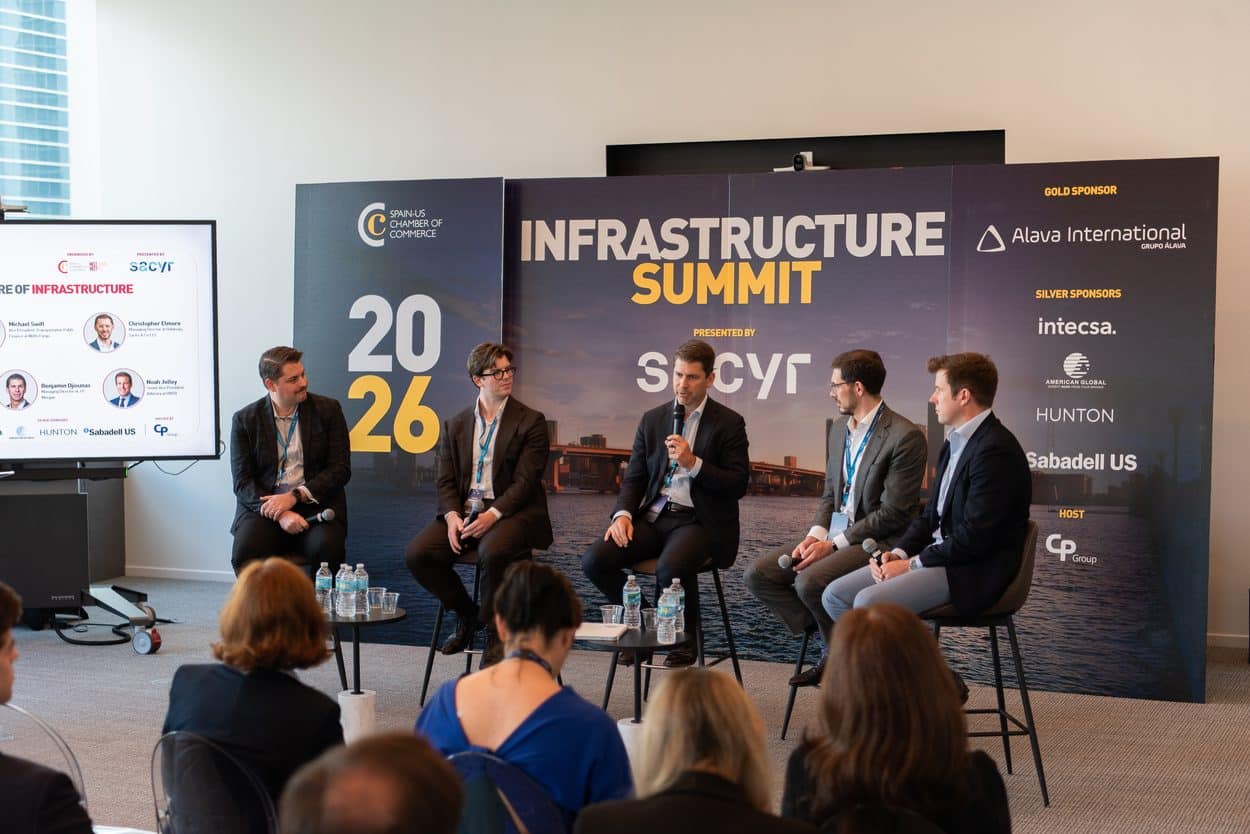
The final panel, Financing the Future of Infrastructure, featured José María Lacasa, Executive Vice President and Florida Business Director at FirstBank Florida; Benjamin Djiounas, Managing Director at J.P. Morgan; Christopher Elmore, Managing Director at Goldman Sachs & Co. LLC; Casey Bush, Director of Infrastructure Finance at KeyBanc Capital Markets; Noah Jolley, Senior Vice President of Advisory at HNTB; and Michael Swift, Investment Banking Vice President at Wells Fargo.
The discussion highlighted the continued strength of U.S. infrastructure capital markets, with robust financing opportunities across bank loans, private placements, municipal bonds, and private activity bonds. Despite elevated interest rates and rising construction costs, investor appetite remains strong, supported by an expanding pool of institutional and financial investors. The rapid growth of artificial intelligence and digital infrastructure, including data centers and fiber networks, is attracting hundreds of billions of dollars in investment while also introducing new sources of capital into traditional infrastructure sectors.
The panel also explored the increasing scale and complexity of infrastructure transactions, particularly in managed lanes and major transportation concessions, where greater competition and increasingly sophisticated investors are driving higher valuations. However, rising construction costs, aggressive long-term traffic projections, and differences in asset valuations present important risks for project feasibility. A central conclusion was that the availability of capital alone does not guarantee successful infrastructure delivery: well-structured procurement processes, realistic financial assumptions, and appropriate risk allocation will be essential to attracting sustainable investment and ensuring that major projects can be successfully financed and delivered.
About the Spain-U.S. Chamber of Commerce
The Spain-U.S. Chamber of Commerce in Florida is a private, nonprofit organization dedicated to strengthening commercial and investment relations between Spain and the United States. Through high-level events, business development initiatives, and institutional partnerships, the Chamber connects companies, investors, and government leaders to foster economic growth and cross-border opportunities.
Media Contact
Spain-U.S. Chamber of Commerce in Florida
www.spainuschamber.com
Ana Lluch, all@spainchamber.org